Showing posts with label #whywisd. Show all posts

Saturday, July 7, 2018

Digital Footprint from the Teen's Perspective

I had the honor of facilitating a panel discussion by a few of our high school students on digital citizenship this past spring. This session was at the Texas Social Media Conference held at our local education service center. 

This group of students appeared on my radar one evening when their group, Texas Teens Teach, started following me on Twitter. After scheduling a meeting with these students, we met and discussed digital footprints, online presence, and what they wanted to accomplish. The students "fine-tuned" Twitter handles, worked on their website, and had some great discussions about goals for the group. Soon after, an opportunity presented itself for the students to discuss digital citizenship and digital footprints through the eyes of teens at the Texas Social Media conference. We submitted a proposal and made plans to attend once it was accepted. 


Through a panel discussion, students shared their journey and the lessons learned a long the way. With comments such as "Our Twitter feed tells a story" and "Followers are the new recommendation letter" showed that these teens definitely understand the impact of social media and how it can have a positive effect when used purposefully. Several of the students discussed how digital citizenship should be taught by teens and should be discussed in friend groups. Time was provided at the end for questions from the attendees, who ranged from educators to social media representatives from various organizations. 

While at the conference, the teens (many who already have LinkedIn accounts) networked with the keynote speaker, Dr. Marialice B.F.X. Curran, who talked with them at length about future opportunities and how they can grow their organization. In addition, one school leader invited the students to present to the students on their campus. The students were also interviewed by Fort Worth Today, which allowed them to reach an even broader audience.

Something to note is that these teens had established an organization (Texas Teens Teach) and had a plan on what they wanted to accomplish. This all happened without adults assigning a project or assisting in the process. What they needed was a little guidance and an opportunity to share their story. This was an AUTHENTIC learning experience that was RELEVANT to these learners. This was learning that was PERSONAL to these students. 

For more information about the group, check out their information below. 

Friday, March 16, 2018

The Power of Global Connections

Recently, I received an invitation to visit a 2nd grade bilingual classroom in our district. The email explained that Mr. Paul Kantz's class would be connecting via Skype with Lupita Tovar, an astronomy and astrobiology PhD student at the University of Washington. I had seen on Twitter that Mr. Kantz's students had connected with a scientist and had done some Mystery Skypes and I was excited to see Mr. Kantz embrace global connections and seek out these opportunities for his students! This was always one of my favorite things to do in the classroom & the library.

The mission statement of our district is "to teach, challenge, and inspire each student in a safe, nurturing environment to succeed in the global community. In Mr. Kantz's room, he has this on the wall and "global community" is highlighted. This year, he has certainly opened up his classroom to the global community through connections with scientists and by participating in "Mystery Skypes" with other schools, in both English and Spanish.

I asked Mr. Kantz what he believed to be the biggest impact from these connections. Here was his response:

"The biggest surprise to me has been the intensity of learning that occurs prior to making a Skype connection. Myself and my students all feel like we are on a mission. I know that I must prep them well so they can understand what the scientist is talking about and ask intelligent questions. The students feel a sense of urgency, too. They begin to pick up and use relevant vocabulary, for instance, much more quickly than they might otherwise. They have become adept at formulating rich questions that call on a speaker's personal experience, as opposed to simple factual questions that we could easily Google. 


Beyond that, the connection itself is so important. It broadens students' horizons. Low-income students, in particular, tend to have had limited opportunities to travel, visit museums and so forth, which can act to constrain their academic success. If my students can talk to a scientist in Panama or Washington state (as we have done), or play "mystery Skype" with fellow elementary students in Ohio or Minnesota, then I think it can be a game-changer. And in the course of it all, they pick up so much collateral information as well. We talked to an astronomer, for example, but she told us about college life, scholarships and study abroad programs, as well as planets, stars and telescopes. (And we looked up her state on a map.)

Finally, I think it's important to connect my students with some good role models. I want my students to say, "I want to be like him or her!" And later for that aspiration to be a reason to take their studies seriously, stay in school, and go to college."

The students all enjoyed the connection and were very attentive during the conversation with Lupita. One student had this to say about the experience:


You can see that connecting students is POWERFUL and it opens up the world to them. There are a variety of tools to use to connect your students, including Skype, Google Hangout, Flipgrid and Zoom, just don't forget to keep student safety and privacy in mind when you connect. Use the same guidelines you would when bringing any guest into your classroom and make sure students have permission to be photographed or recorded.

Whether you are connecting your students through Mystery Skypes, connecting them to experts or connecting them to students across the country to celebrate Global Read Aloud, the important thing is to connect! 

What are some ways you connect your students? Please share! And be sure to connect with Mr. Paul Kantz on Twitter to see who his students connect with next!


Wednesday, November 1, 2017

Allowing for Choice in the Classroom

In Weatherford ISD, we are making steps to move from a traditional teacher-led instructional environment to a more student-centered learning environment. This shift is less about tools and more about mindset, which is sometimes a bit more challenging. And while our goal would be to create a more personalized approach to learning, some of our first steps are working on providing opportunities for choice and voice. 
In the last few weeks, there have been some good examples of this seen in middle school science classrooms. In 8th grade science at Hall Middle School, Coach Kerfoot offered his students the choice of demonstrating their mastery of the learning by either a traditional test or through other means. In an effort to build a tool box for students, Kerfoot has pre-selected some choices for the first couple of units. Eventually, students will have free choice, but for this unit they were able to choose a traditional test, create a comic, or write a poem or rap to show that they had learned the content presented. In addition, Kerfoot worked with students to create a rubric based on standards for this unit. As background, this classroom is equipped with a Chromebook cart, so students have access to technology while in the classroom. These devices are not checked out to students, so time is provided in class for students to work on their projects, including work sessions on Fridays.  At this time, many of the learning components are digital, using STEMScopes and Google Classroom. Even with technology available, many students chose to create on paper. A few students tried Powtoon and one or two turned in a recording of their rap or poem.  When students were asked their thoughts on having choice, one student said that they like that they are able to be creative. Another student talked about how they look forward to working on the project and liked having options. In the next unit, students will be using some type of video to show their mastery, which this will lend itself to being a perfect opportunity to discuss digital portfolios with the students!

Across town at Tison Middle School, Ms. Harris's 7th grade science class is also being provided choice in how they demonstrate their knowledge. Through our Roos Go 1:World initiative, students in 7th grade are issued a Chromebook that they bring to school each day.  Students are studying the human body systems in Harris's class and are working in groups to show what they have learned. Harris uses Canvas LMS regularly in her classroom, so when students walk in there is a routine set to log in to Canvas for the day's assignment. In this classroom, students were not provided a list of options for how to show their knowledge, but some tools were suggested. Walking around the room, you could see that several groups have chosen Google Slides, and a few others had selected Emaze and Prezi.

In both classrooms, in addition to choice, the 4 C's were also included! Students were able to work in groups, which allows for collaboration and communication. Creating these products also encourages creativity, which many of the students seem to enjoy. It will be interesting to watch the progression of choice and the development of a set of tools students can use to show their mastery of concepts being taught.  An individual reflection piece built into the group presentations would give good insight for the teachers as to the level of understanding and engagement of each of the students. This would be easy to incorporate into a Canvas course, which is the direction we are headed with our secondary classrooms.

These are all steps in the right direction for creating student centered classrooms! 


Sunday, October 15, 2017

Student Portfolios- More than Just a Test Score

A great debate within public education is the importance placed on standardized tests. Some say that this is THE way to measure student growth. Others say that students, teachers and schools should not be judged on one day of testing alone. The one thing that most agree on is that student growth should be measured, but we struggle with better options. 

One way to show student growth, in a way that also offers opportunity for reflection, would be to work with students to create digital portfolios. In the book, Students at the Center: Personalized Learning with Habits of Mind by Bena Kallick and Allison Zmuda, digital portfolios are suggested as a way to address the four attributes of personalized learning: voice, co-creation, social construction and self-discovery. You can read more about student portfolios on their blog post, Student Portfolios: the Narrative of Learning.


There are some obstacles to creating and using digital portfolios that will need to be addressed before implementation. One obstacle is the lack of reliable access to devices. To create meaningful digital portfolios, students must have regular access to devices to use for creating digital products and reflecting on learning. Without regular access students and teachers will struggle with seeing the value of digital portfolios or even what products to add.

Another obstacle to creating and using digital portfolios is creating opportunities for critiquing and reflecting on learning. Students will need teachers to model this as well as coach them through the process. In the beginning, students might struggle with honest reflection of their work. Teachers will want to support students as they recognize early attempts at learning and the value this has in a portfolio. Portfolios will be more meaningful if they show growth and not just refined, polished products.

Finding the right tool is one more obstacle to overcome when implementing digital portfolios. With younger students, some teachers have found success using a tool like SeeSaw. This allows for students to easily add their work and share with families. Parents are only able to see their student's portfolio, which is important when considering student privacy and safety. For older students, Google Sites or an ePortfolio component of your LMS are great options. We use Canvas LMS in our district and each student is provided an ePortfolio (digital portfolio) that they can use to easily add products that have been turned in through Canvas. These portfolios remain private until students choose to share them. Each year, students can continue to add to their portfolios, which could be a powerful resource for the scholarship & college application process. George Couros references this in his blog post "3 Things Students Should Have Before They Leave High School."

Lastly, finding an audience for students is another obstacle. As mentioned before, care needs to be given to student privacy and safety, so finding authentic audiences while still maintaining privacy and safety creates a challenge. I would be interested in learning how others are overcoming this obstacle. What ideas have worked for you and your students?

Student learning should not be measured by standardized test scores alone, but unless we create more relevant, authentic avenues, this is what we are left with. My goal this year is to work with a few brave teachers in our district to pilot this approach to measuring student growth. With the teacher's support, students can co-create a digital portfolio that will offer opportunities to showcase learning, as well as provide a space for reflection on their learning. 

Have you had success with digital portfolios? Please share your experiences with us.

Saturday, September 9, 2017

Keeping the Main Thing the Main Thing

Several years ago, a very wise friend was listening to me bemoan the fact that I was so far behind with all of the little tasks that I needed to get done as a librarian. There were books that needed to be repaired and book carts were full of books to be shelved.  She gave me probably the best advice I have been given as an educator, she said we have to "Keep the main thing the MAIN THING." She reminded me in my role as a librarian, students and teachers were my main thing and as long as I  kept that as my focus, I was good.

Fast forward to mid August this year and I was again in need of this reminder. In my current role, I work a 12 month calendar, so during the summer months we can sometimes get bogged down by the "little things" and forget our true reason for doing what we do. But come late August, when students walk back through the doors, our purpose comes back into focus and it is a great feeling!


First Day of School! Breakout EDU & boxes of Kleenex!
As an extra "Back to School" bonus, I was invited to co-teach a lesson during the first week of school with one of our 6th grade social studies teachers. She wanted support as she tried a lesson using Canvas LMS, Google Drive and Google Earth, a lesson that we created during a one-on-one session before school began. Having spent the last year or so helping teachers become more comfortable using technology in their classrooms,  I was thrilled to be invited! Honestly, there is no better feeling than being in a classroom with students and seeing them excited about learning! 

Students exploring Google Earth during a World Cultures class
My MAIN THING may look a little different in the role I am in, since I am working more with teachers than directly with students, but this work is important, as it has the potential to positively impact students and learning. 


Keeping the main thing the MAIN THING this year is the goal. What this will look like is getting in to classrooms, working one on one with teachers to support them as they create student-centered learning environments using a blended learning approach.  We will be supporting teachers as they try things outside their comfort zone, with the ultimate goal to see students actively engaged in learning. THIS is the MAIN THING.


As we prepare a new group of teachers this year for a 1:1 learning environment, it is exciting to see them already start to shift their thinking about teaching and learning. It is sure to be a great year!

Sunday, January 15, 2017

Change- Where Do You Start?


I recently blogged about staying on course even when things seem uncertain(read about that HERE). Even when politicians seem to penalize schools and districts for embracing change. Even when teachers are wanting students to be prepared for more than just a one day test, but the one day test is how you are measured. That post and conversations recently made me think more about change.


According to Merriam -Webster, one definition of change is to undergo transformation, transition, or substitution. Our district spent the better part of last school year on our Strategic Plan. During this process, we used the Visioning Document to guide our focus. The Visioning Document is a collaborative effort of 35 public school superintendents who recognized that we needed a different vision for public education in Texas. They knew we needed to change. They created a document describing this change.


And yet, today, almost 10 years after this document was published, very little has changed. So the question is WHY? Is it because the way we measure students, as determined by lawmakers, hasn't changed much? Or is it because we aren't quite sure where the "change" has to start? At what point do we make a change that will create this transformation that we know is best for education? Do we have to change the whole system or can we start small?


Around this time last year, I was able to hear Sir Ken Robinson at an event called EdShift. I first learned of his work through my principal at the time, Racheal Rife, who shared with us "Changing Education Paradigms" which received many head nods while our campus watched it.

Ken Robinson's Ted Talk "Do Schools Kill Creativity?", is the most watched TedTalk of all time. If you haven't seen it, I highly recommend it.


Hearing Robinson in person was very inspiring. One of my main takeaways from that day is that we might not be able to change the national education system/policy, or even our state education system/policy, but to our students, WE are the system and we have control over our classrooms and how we interact with our students. We can change what happens inside our classrooms. That was very powerful to hear and made "change" seem more manageable. Even writing this now, it lessens my stress of trying to change ALL of education and helps me focus just on what is in front of me... teachers & students in my district. That is manageable. An informative article with an excerpt from his book, Creative Schools reminded me of this day. In this article Robinson says, "But revolutions don’t wait for legislation. They emerge from what people do at the ground level."


So for this week, I will focus on and celebrate the innovation that is happening in our classrooms, and build upon that. I will focus on and celebrate the teachers who are taking risks to learn new skills and implementing those in their classrooms with and for their students, and build upon that. I will focus on leading a revolution of change within our district and finding those who are ready to join in. Our students deserve this effort and focus.


And I will be comfortable in losing sight of one shore as I focus on the horizon, knowing that change is scary, uncomfortable and oftentimes comes with unchartered territory. But I'm pushing off...

How are you changing things that are within your control? Do you have some ideas for encouraging and supporting change within a district or campus? I would love to hear ideas from those who are at the "ground level" and not in "committee rooms."

Saturday, July 16, 2016

What Happens When We Empower Teachers?

There is nothing better than talking with an excited teacher, one who has just learned of an idea or has had a revelation or a shift in mindset. And when you can also give them a "YES" go ahead and try that great idea, then you are setting them on a path to share that excitement with other educators and their students. It is a win-win for everyone and an opportunity to positively impact the culture of that district. As I read this article, When School Leaders Empower Teachers, Better Ideas Emerge, I realized that just as we want teachers to empower student learners, district leaders should empower our educators. When this happens, it would seem that progress would happen more quickly and leadership capacity is being built.

Having someone listen to you and be willing to say yes to your idea is very empowering for students, teachers, or anyone else for that matter. Recently, this idea was brought to my attention during a webinar where Dr. Pam Moran, Superintendent in Albemarle County Public Schools in Virginia, where she talks about getting past the "yeah, but and getting to what if can be pretty difficult." You can watch her TedX Talk called Getting Ourselves to Yes where she describes this situation.


Leaders in school districts are often faced with this. An excited teachers come to you with an idea they want to try, and your brain goes through a list of "buts" that tend to deflate the excited teacher fairly quickly. But it doesn't have to be that way, and the results of saying yes can be huge. Here are just a few examples from this year where I have seen "Yes" turn into amazing opportunities for all learners.


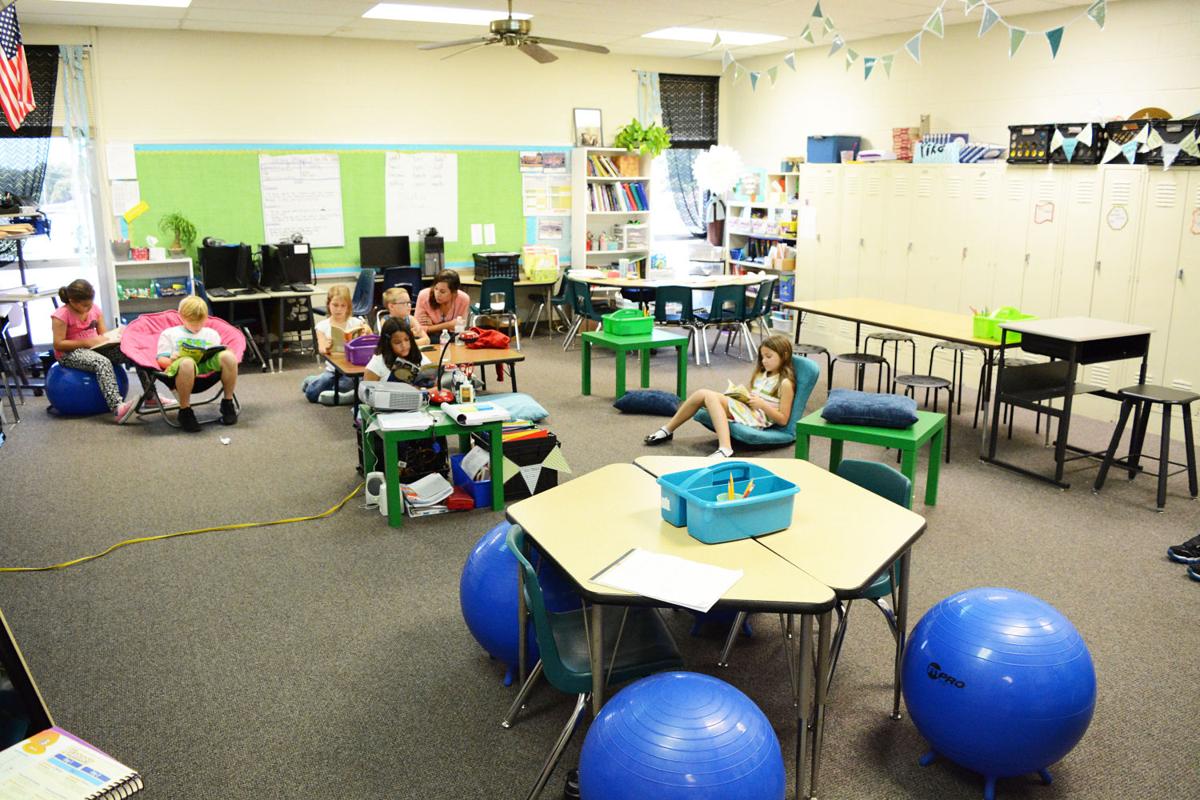
Several teachers around our district wanted to re-design their classroom space. These teachers felt like creating a learning space that was kid friendly, comfortable and flexible would allow for collaborative learning opportunities that would become a natural part of their classroom culture. The teachers were able to verbalize their "Why" which is an important part of getting to "Yes"! Since most of what we know about classroom space is desks in rows, it would be natural for principals to say "yeah, but..." Instead, we watched as teachers created these spaces uses their own funds, Donor's Choose and any other donations they could find. Here are just a few of the Innovative Spaces that were created around our district.


During the school year, we had "early adopters" excited about Canvas, our new LMS. Without training or professional development, they were creating a blended learning environment for their students. These teachers expressed a desire to learn more and to offer a true blended learning course at the secondary level. This is not something our district had tried before, so our Executive Director of Secondary Education, Dr. Lance Campbell arranged for them to visit districts who had successfully implemented blended learning. Not only did he support their efforts with training, but also helped them as they redesigned the physical space. It used to be that our campuses were very "institutional" looking with colorless walls and 25-30 desks in a classroom. Through conversations and research, these teachers created plans for their new spaces, based on research and looking at current trends in collaborative workspaces. James Gibbens, middle school teacher, had many conversations with his campus administrator about developing a learning environment for his students. Through these conversation, support was received for a blended learning class, as well as a redesign of classroom space and repurposing space around the entire campus to create collaborative work areas.


One of our blended learning teachers, Macie Thompson has started blogging about her experience. She created a floor plan & a Pinterest board with the items she would need to create the type of learning space she felt would benefit the collaborative culture she wanted to have for her students. With her careful planning and knowing her WHY, she was able to get a "Yes" from Dr. Campbell. 

Another example is a personalized professional development pilot that two teachers proposed just a few days ago. These two teachers, Amanda Rogers & Amanda Mask are "out of the box" thinkers and self-directed learners. They can often be found attending edcamps and presenting at conferences, both near and far. During a Google Summit in May, they learned of a personalized GAFE PD program that would involve a self-assessment and a menor/mentee relationship that would help teachers move from Level 1 to Level 2 or Level 2 to Level 3. Level 2 & 3 teachers would mentor Level 1 teachers, with the hope that everyone would move up to at least the next level within 1-2 years. The teachers worked on their proposal, knew their WHY and were easily able to share this with Racheal Rife, our Executive Director of Elementary Education (and, unexpectedly, our Superintendent, Dr. Jeffrey Hanks.) With their plan, they would pilot it with volunteers on their campus and hopefully a "sister" campus within our district. The teachers accepted ideas, such as allowing it to be voluntary, and adding a digital portfolio and digital badges to their program, and were given a YES by Rife. By building leadership capacity and empowering these teachers, the reach will be much farther than what any one person could do alone. 


Our district is moving to more YES's than NO's, and is making progress in the "yeah, but" area, but it is a work in progress. Where is your district? How often do you say "yes" as a leader? 

Friday, July 1, 2016

Creating Future Ready Advocates

For several years, our school district has been using the Visioning Document as a tool to drive change in the way we do things. If you aren't familiar with this document, it involved  35 superintendents in Texas in 2008 who wanted to create a new vision for public education in Texas. It is clearly labeled as "a work in progress" and is meant to start conversations about how public education could and should change. Many of our principals have gone through the Principal Visioning Institute and they brought it down to the teacher level in WISD. 

This past school year, we changed the name to Future Ready Academy, but the premise was the same- helping teachers grow professionally without the expectation of it being a "trainer of trainer" role. Then we heard about the iSchool Initiative and both their Certified Teacher program & iSchool Student Advocate program. I visited with April Riley from Aledo ISD and she shared with me the impact the teacher program had on their district. After discussions with Travis Allen, founder of iSchool Initiative, we secured dates for the Student Advocate program. We eventually added the Certified Teacher program, but that post will come later. 

The Student Advocate program was held late in May, when schedules are crazy and days are already jam-packed! Everyone made the best of it, and we started the application process, which included interviews on three different campuses. Although the process was tedious, it was a good experience for the students to go through, and one that will probably serve them well as the continue along their educational journey. One thing that was clear, Weatherford ISD has AMAZING students! If we had 80 spots, we could have filled 80 spots. Unfortunately, we were limited to 40 students, 10 on each of the secondary campuses. 


After the selection process, students attended a three day training with involved public speaking, problem solving, team building, ISTE Standards for Students, digital citizenship, identifying issues in our district, solutions, and finally a presentation. It was fast-paced and a lot was covered in the three short days, but it was inspiring to see the student presentations on the last day. 


Technology was a natural part of the day, students using their Chromebooks to answer questions and find information without being told. Sometimes teachers feel that they have to come up with an activity to use technology, but really it should be a tool, just like paper, pencils, calculators, or textbooks.


A parent meeting was held after the first day, to share with parents about the program and what it means for the students to be an iSchool Student Advocate. As the meeting was about to begin, one of the iSchool leaders talked to the students who were in attendance and tasked them with facilitating the meeting. The students stepped up to this challenge without even a second of hesitation and were able to easily share what had taken place on the first day of the program. It was great to see the confidence and their ability to verbalize what they learned from the first day. One student said, "If school was like this every day, I would love coming to school!" 


On the 2nd day, District Administrators came in and talked about issues in our district that the students might want to create solutions for during this program. Not all of the issues involved technology, but the solution could. 


Students got busy choosing an issue and then working on creating a solution. There was a lot of discussion and brainstorming during this part of the program. Students had already been working with Google Slides, so this was a natural tool for them to use.


On the third day, the students polished up their presentations that they worked on the day before. One group was so motivated to have a great presentation that they spent an additional 4-5 hours at Chick-Fil-A working on their project after they had already been working on it during the 2nd day. That is an empowered learner!


Then it was time to start pitching their solutions to an audience. We did this jointly with students in Aledo ISD, so the audience was even bigger. The students did such a great job, especially considering the short amount of time they had to work with. 


We are very excited to see this program grow and are looking forward to seeing all that our Student Advocates are able to accomplish this next school year. Their first project will be to help with our Back to School District-Wide Convocation! 


Stay tuned for a post about our experience with the iSchool Certified Teacher program! Creating even more Future Ready Advocates!

Wednesday, June 8, 2016

What? It is May (I mean JUNE!!) ?!?

I'm not exactly sure how it happened, but it is MAY  JUNE!!! I saw this image on Facebook recently, and this is just how I feel right now! Or at least that was how I felt a few weeks ago when I started this blog! Sometimes blog posts take a little longer than expected. 


During the last few months, the focus has been on creating a personalized learning environment for ALL. This means we are looking at ways to personalize learning for our students, as well as for our adult learners! For our students, we are developing blended learning classes at one of our middle school campuses and at our high school. Blended learning is a learning environment where students learn with both face to face instruction and an online component. 

After touring a couple of districts during the fall, we have started our own journey into blended learning. Teachers and administrators first visited campuses in Lewisville ISD and saw how teachers created blended learning environments in a variety of content areas and at different levels. Sometimes, just seeing the physical space helps us to shift the way we see our learning spaces. On each of the campuses, there were many different types of collaborative spaces for the students to use while on campus. At the high school level, students could choose not to work on campus on their online days, but space was certainly available if the students were on campus.


We were able to see first hand the power of a blended learning environment. In a high school algebra class, students were receiving one on one help, even though it was not a face to face day. 


At the middle school level, students would check-in at various collaborative spaces using a device and a Google form and begin work.


Lewisville ISD was so gracious as to invite us to attend a blended learning training in the spring. We took eight teachers to the training, some who will be teaching a blended learning course in the fall, and some who are interested in learning more and offering a blended learning environment for their students.

We will be reading the book, Blended: Using Disruptive Innovation to Improve Schools by Michael B. Horn & Heather Staker.


Our journey has just begun, but we are excited about the possiblities and how we can better meet the learning needs of our students! 

Saturday, February 6, 2016

TCEA 16 Takeaways

I just returned home from a week FULL of learning, connecting, sharing & growing at TCEA in Austin. The connections I made, both new and old, made the week a great experience! 


My focus for the week was on learning more about creating personalized professional learning opportunities for our teachers and supporting a 1:1 initiative. Google tools and tips are always on my radar, so I planned to work that in also! Thankfully, my TLBFF, Tina Berumen, created a collaborative Google Doc for session notes, so that we could all share & learn! 


The Google Academy was a great day of learning all things Google! From the Keynote Panel to all of the breakout sessions, I learned so much. The session on Google sites by Christy Fennewald gave me helpful information on how to make my WISD Professional Badges site better. I was cautioned to not have too many tabs, and to work on eliminating drop-downs. 

By Tuesday, we had about 35 people from WISD at TCEA to learn! One of our assistant principals, Leslie Ackmann, had create a Google+ Community for all of us to share our notes and presentation information. We also established a district hashtag for TCEA, #WISDtcea16, which enabled us to share learning quickly. It was awesome to see the excitement as they went from session to session, tweeted & posted! We even had one campus, our Ninth Grade Center, that would meet each evening to debrief.  The best part- the teachers organized this! 


As I was gathering information on badging for professional learning, I met so many helpful people! It is so funny how things will transpire, but I mentioned to my friend, Michelle Cooper about the badge system. She introduced me to Scott Floyd who had created a system for White Oak ISD, who introduced me to Dr. Roland Rios, from Fort Sam Houston ISD. Scott also told me that I need to meet Kelly Fitzgerald. What is amazing is how each of these people spent time and shared resources with me, someone they had just met, to help me create a successful badging system for our teachers. Coincidentally, Kasey Bell of ShakeUpLearning also updated a blog post on Badging, which was sent to me no less than four times! Guess what I am working on this weekend?!

I was also reminded that some of the best learning happens outside sessions, in hallways, at tables at the back of the exhibit hall, at dinner, anywhere you are able to have conversations with others. I'm so appreciative of the time Brandi Rosales took to help me with features for the badge site! We truly have some AMAZING people in education in North Texas!!

There were no shortage of sessions offered for 1:1 rollouts, initiatives, PD and support! A couple of the best were Chad Jones from Lamar CISD who went step by step on how to rollout devices or programs. It was so thorough, from starting with the end result and working backwards, to developing a detailed planning document to make sure all stakeholders are involved and informed. Their instructional technology website, iCafe, is amazing and helps teachers find the help they need at any time of day! 

Another great session was by Temple ISD's Instructional Technology team, Jessica Mays & Jacki Wright. What I liked best about this session is they shared how they worked through issues they had when implementing 1:1 at their high school. It is always helpful when people share their failures, along with their successes! Our high school will soon have a student tech team, so it was great to hear about their TechCats & how they work with teachers & students, along side the instructional technology specialists!

Other cool things that happened:
I presented with two out of my three #TLBFFs, Nancy Jo Lambert & Tina Berumen! We presented on Knocking Down Your Library Walls during the Librarian Academy. 


I met Eric Sheninger, author of Digital Leadership and Uncommon Learning. I have recently read both of his books, so it was nice to be able to meet him in person. Hopefully we can get him to our district soon! And that is Matt Arend photo-bombing! He is an elementary principal in Plano and doing great things in education! I've followed his journey on Twitter and enjoy reading his blog.


Being able to see the excitement & engagement of our teachers was awesome! We had two teachers present on Knocking Down the Walls in Your Classroom. Amanda Rogers & Jacqueline Rose connect their students as a normal part of their classroom environment. They even had students join in the presentation! 


And I found two of our teachers, Jessi Medlin & Shelly Stout, being interviewed in the TCEA Radio booth! I know they will be taking their new learning back to their classrooms, teams & campus!


It was a great week and there were many more connections that happened that inspired me to keep learning & growing! I finally was able to meet Jess Malloy & Ryan Steele, who have created an amazing learning commons on their campus! My #oneword for 2016 is ACTION, so I will be immediately putting into action my new learning about badging systems for professional learning. 


** To grow your #PLN on Twitter, be sure to click on names. They are all linked to the individual Twitter accounts**