Showing posts with label #futureready. Show all posts

Sunday, January 15, 2017

Change- Where Do You Start?


I recently blogged about staying on course even when things seem uncertain(read about that HERE). Even when politicians seem to penalize schools and districts for embracing change. Even when teachers are wanting students to be prepared for more than just a one day test, but the one day test is how you are measured. That post and conversations recently made me think more about change.


According to Merriam -Webster, one definition of change is to undergo transformation, transition, or substitution. Our district spent the better part of last school year on our Strategic Plan. During this process, we used the Visioning Document to guide our focus. The Visioning Document is a collaborative effort of 35 public school superintendents who recognized that we needed a different vision for public education in Texas. They knew we needed to change. They created a document describing this change.


And yet, today, almost 10 years after this document was published, very little has changed. So the question is WHY? Is it because the way we measure students, as determined by lawmakers, hasn't changed much? Or is it because we aren't quite sure where the "change" has to start? At what point do we make a change that will create this transformation that we know is best for education? Do we have to change the whole system or can we start small?


Around this time last year, I was able to hear Sir Ken Robinson at an event called EdShift. I first learned of his work through my principal at the time, Racheal Rife, who shared with us "Changing Education Paradigms" which received many head nods while our campus watched it.

Ken Robinson's Ted Talk "Do Schools Kill Creativity?", is the most watched TedTalk of all time. If you haven't seen it, I highly recommend it.


Hearing Robinson in person was very inspiring. One of my main takeaways from that day is that we might not be able to change the national education system/policy, or even our state education system/policy, but to our students, WE are the system and we have control over our classrooms and how we interact with our students. We can change what happens inside our classrooms. That was very powerful to hear and made "change" seem more manageable. Even writing this now, it lessens my stress of trying to change ALL of education and helps me focus just on what is in front of me... teachers & students in my district. That is manageable. An informative article with an excerpt from his book, Creative Schools reminded me of this day. In this article Robinson says, "But revolutions don’t wait for legislation. They emerge from what people do at the ground level."


So for this week, I will focus on and celebrate the innovation that is happening in our classrooms, and build upon that. I will focus on and celebrate the teachers who are taking risks to learn new skills and implementing those in their classrooms with and for their students, and build upon that. I will focus on leading a revolution of change within our district and finding those who are ready to join in. Our students deserve this effort and focus.


And I will be comfortable in losing sight of one shore as I focus on the horizon, knowing that change is scary, uncomfortable and oftentimes comes with unchartered territory. But I'm pushing off...

How are you changing things that are within your control? Do you have some ideas for encouraging and supporting change within a district or campus? I would love to hear ideas from those who are at the "ground level" and not in "committee rooms."

Saturday, January 7, 2017

Being Future Ready in an A-F World

This week, Texas public school districts were notified of "preliminary" results of the new A-F rating system that was created by the 84th Legislature. Although these results have been labeled a "work in progress" and ratings will not become effective until August 2018, it was required by the Legislature that they be presented in January 2017. These ratings take pages and pages of explanation to understand and rate campuses on four different domains at this time (there will be five in the final system) - Student Achievement, Student Progress, Closing Performance Gap and Post Secondary Readiness. There is information available on TEA's Webpage and on TASA's Webpage if you would like to read more about it. 


I will not try to explain this rating system, as it certainly seems like it has flaws and that it is far from easy to understand. My question though, is where does "preparing students for their future" fit in here? Where do the 4 C's (Communication, Collaboration, Critical Thinking, & Creativity) fit in? Where do global connections fit in? Where does innovation & student-centered learning fit in? How can we move forward in the 21st century when our legislature keeps pulling us back into the 20th century? 


In our district, we are preparing for a 1:1 roll out at the 7th grade, a grade level that is responsible for preparing students for Reading, Math & Writing STAAR tests. During this school year, we have been working on integrating technology into classroom instruction, working through becoming proficient with our LMS (Canvas) and understanding how the 4 C's, SAMR & personalized learning all fit in. Every 7th grader will be issued a Chromebook for the 2017-2018 school year and learning should look different in these classrooms. Unfortunately, the new rating system will not take into account any of this. Much of the rating consists of how students perform on their standardized tests. So I wonder, will we lose momentum with this "preliminary" rating? Will educators and administrators become more focused on test prep and less focused on personalized learning for their students? As I read blogposts and letters from administrators all over Texas, I have come across people talking about "getting back to the basics" and "structured learning" for 4 year-olds.  Is this truly what is best for our students? Might this just be what is wrong and why we don't seem to be making the strides we should be making? We are 17 years into the 21st century... when will our education system catch up? 


I don't have answers to this right now, but I truly feel that it is TIME FOR CHANGE. I have not heard people in education arguing against accountability. That is not the change that we need, but should we be looking at different measures? Measures that ensure our students leave us with the skills that will help them be prepared for whatever their future holds? Can standardized tests be just ONE way that we look at our schools instead of the bulk of how we measure our schools? Can our Texas Legislators visit classrooms and talk to educators before they add another 50-60 pages to our already overloaded Texas Education Code (it has over 3,000 pages right now) this Legislative session?

Thankfully for the students of Texas and beyond, groups are working to make and support a shift in education. The Office of Educational Technology created Future Ready Schools. Here superintendents pledge to focus on digital learning, empowering educators, and supporting other district leaders as they embark on this journey. Hopefully the new administration will continue the forward progress made by this organization. In addition, Digital Promise is another group working to promote and support innovation in education. In Texas, we have Raise Your Hand Texas, an organization that "focuses on identifying breakthrough ideas to improve education, piloting them in our public schools and supporting the conditions and public policies that allow them to scale to reach all Texas students." Our district has used the Texas Visioning Document to create our belief statements and to focus our journey. There is certainly support for transformation in education, if educators are open to it and not penalized for moving in that direction.


Thinking about all of this, what comes to mind is that we must stay the course. The journey is sure to be rough, and we will want to turn back to safer shores, but we must continue to focus on transforming education. The Texas Legislature could focus on helping to bring our public education system into the 21st century and not slowing progress with 20th century accountability ratings. We owe it to our students, our families and our communities. 

Stay strong educators!


Saturday, July 16, 2016

What Happens When We Empower Teachers?

There is nothing better than talking with an excited teacher, one who has just learned of an idea or has had a revelation or a shift in mindset. And when you can also give them a "YES" go ahead and try that great idea, then you are setting them on a path to share that excitement with other educators and their students. It is a win-win for everyone and an opportunity to positively impact the culture of that district. As I read this article, When School Leaders Empower Teachers, Better Ideas Emerge, I realized that just as we want teachers to empower student learners, district leaders should empower our educators. When this happens, it would seem that progress would happen more quickly and leadership capacity is being built.

Having someone listen to you and be willing to say yes to your idea is very empowering for students, teachers, or anyone else for that matter. Recently, this idea was brought to my attention during a webinar where Dr. Pam Moran, Superintendent in Albemarle County Public Schools in Virginia, where she talks about getting past the "yeah, but and getting to what if can be pretty difficult." You can watch her TedX Talk called Getting Ourselves to Yes where she describes this situation.


Leaders in school districts are often faced with this. An excited teachers come to you with an idea they want to try, and your brain goes through a list of "buts" that tend to deflate the excited teacher fairly quickly. But it doesn't have to be that way, and the results of saying yes can be huge. Here are just a few examples from this year where I have seen "Yes" turn into amazing opportunities for all learners.


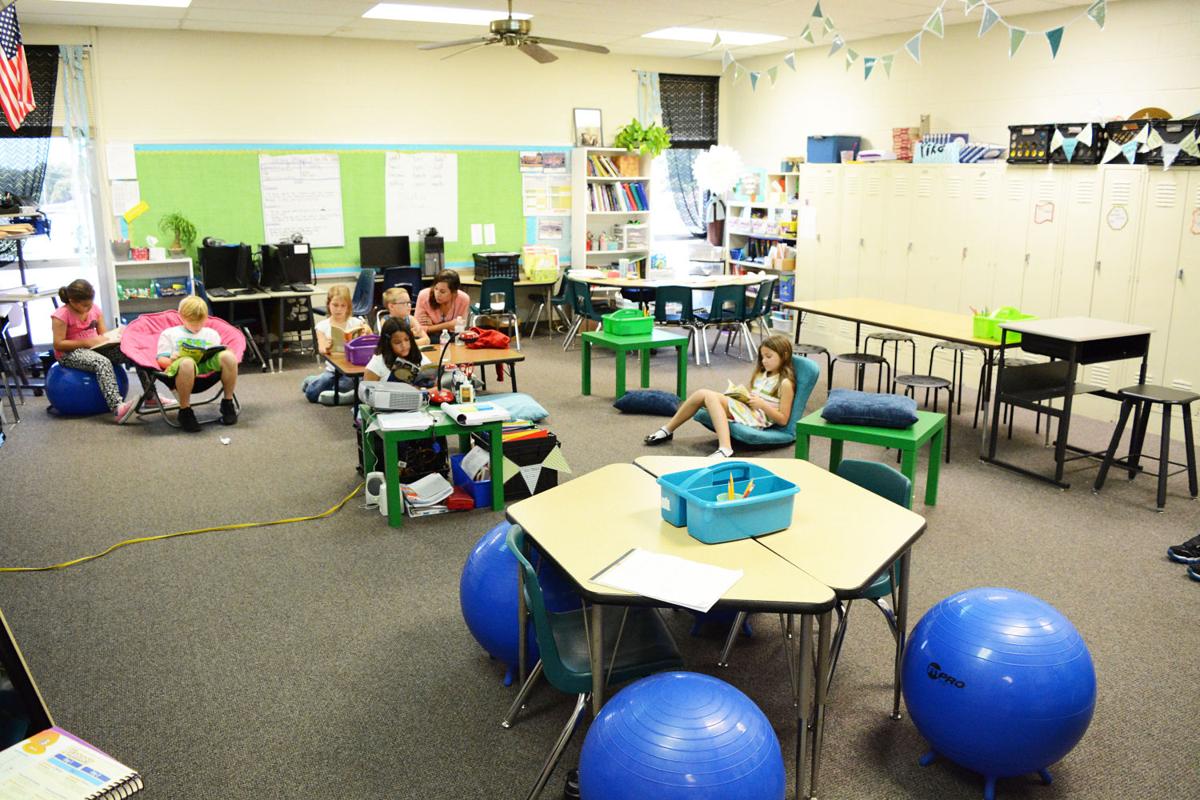
Several teachers around our district wanted to re-design their classroom space. These teachers felt like creating a learning space that was kid friendly, comfortable and flexible would allow for collaborative learning opportunities that would become a natural part of their classroom culture. The teachers were able to verbalize their "Why" which is an important part of getting to "Yes"! Since most of what we know about classroom space is desks in rows, it would be natural for principals to say "yeah, but..." Instead, we watched as teachers created these spaces uses their own funds, Donor's Choose and any other donations they could find. Here are just a few of the Innovative Spaces that were created around our district.


During the school year, we had "early adopters" excited about Canvas, our new LMS. Without training or professional development, they were creating a blended learning environment for their students. These teachers expressed a desire to learn more and to offer a true blended learning course at the secondary level. This is not something our district had tried before, so our Executive Director of Secondary Education, Dr. Lance Campbell arranged for them to visit districts who had successfully implemented blended learning. Not only did he support their efforts with training, but also helped them as they redesigned the physical space. It used to be that our campuses were very "institutional" looking with colorless walls and 25-30 desks in a classroom. Through conversations and research, these teachers created plans for their new spaces, based on research and looking at current trends in collaborative workspaces. James Gibbens, middle school teacher, had many conversations with his campus administrator about developing a learning environment for his students. Through these conversation, support was received for a blended learning class, as well as a redesign of classroom space and repurposing space around the entire campus to create collaborative work areas.


One of our blended learning teachers, Macie Thompson has started blogging about her experience. She created a floor plan & a Pinterest board with the items she would need to create the type of learning space she felt would benefit the collaborative culture she wanted to have for her students. With her careful planning and knowing her WHY, she was able to get a "Yes" from Dr. Campbell. 

Another example is a personalized professional development pilot that two teachers proposed just a few days ago. These two teachers, Amanda Rogers & Amanda Mask are "out of the box" thinkers and self-directed learners. They can often be found attending edcamps and presenting at conferences, both near and far. During a Google Summit in May, they learned of a personalized GAFE PD program that would involve a self-assessment and a menor/mentee relationship that would help teachers move from Level 1 to Level 2 or Level 2 to Level 3. Level 2 & 3 teachers would mentor Level 1 teachers, with the hope that everyone would move up to at least the next level within 1-2 years. The teachers worked on their proposal, knew their WHY and were easily able to share this with Racheal Rife, our Executive Director of Elementary Education (and, unexpectedly, our Superintendent, Dr. Jeffrey Hanks.) With their plan, they would pilot it with volunteers on their campus and hopefully a "sister" campus within our district. The teachers accepted ideas, such as allowing it to be voluntary, and adding a digital portfolio and digital badges to their program, and were given a YES by Rife. By building leadership capacity and empowering these teachers, the reach will be much farther than what any one person could do alone. 


Our district is moving to more YES's than NO's, and is making progress in the "yeah, but" area, but it is a work in progress. Where is your district? How often do you say "yes" as a leader? 

Saturday, July 2, 2016

Librarians as Future Ready Leaders

On June 24, 2016, Future Ready Schools added Librarians to their initiative with Future Ready Librarians. AASL & Follett are project collaborators and thought partners include Carolyn Foote and Joyce Valenza. Read Joyce's SLJ post about Launching Future Ready Librarians The framework will help librarians stay relevant and active in an evolving education system. 


This is an exciting announcement and something we have been working on in Weatherford ISD and definitely something we will use this summer as we map out a three-year plan for our district libraries. 

Future Ready Librarians recognizes that teacher-librarians can and should be at the forefront of changing education and can and should take on leadership roles on their campuses or within their districts. Many librarians are already supporting teachers as they integrate future ready skills into instruction, helping to create good digital citizens, creative thinkers and global collaborators. Many librarians are playing active roles in technology initiatives such as 1:1 rollouts or BYOD on campuses. Many librarians are just as active in technology organizations and conferences, as they are with librarian and literature conferences. With this initiative, these efforts will become more focused and more universal. This will become the norm among teacher-librarians and not the exception.


Looking at each area of focus, you can see the makerspaces we have added to many of our libraries fit right in. In Weatherford, several librarians have created coding clubs and Minecraft clubs, which encourage creating instead of just consuming. 

As you can see, a part of this is creating a learning environment that belongs to the students and staff on a campus, one that is flexible and has multiple uses. Designing collaborative spaces that support blended learning, genius hour, and technology integration should be something we prioritize when we think about our library space. The present day library should look and feel very different than libraries in the past. Schedules might need to be tweaked, purchases might need to be re-evaluated, and the way we have always done things might not be meeting the needs of today's learners. 

It is an exciting time to be a librarian and we should use the guiding questions as we think about our upcoming school year:

How can librarians and libraries support Future Ready schools?

How can librarians and libraries become more Future Ready?

What will you do this year to become more Future Ready?

Friday, July 1, 2016

Creating Future Ready Advocates

For several years, our school district has been using the Visioning Document as a tool to drive change in the way we do things. If you aren't familiar with this document, it involved  35 superintendents in Texas in 2008 who wanted to create a new vision for public education in Texas. It is clearly labeled as "a work in progress" and is meant to start conversations about how public education could and should change. Many of our principals have gone through the Principal Visioning Institute and they brought it down to the teacher level in WISD. 

This past school year, we changed the name to Future Ready Academy, but the premise was the same- helping teachers grow professionally without the expectation of it being a "trainer of trainer" role. Then we heard about the iSchool Initiative and both their Certified Teacher program & iSchool Student Advocate program. I visited with April Riley from Aledo ISD and she shared with me the impact the teacher program had on their district. After discussions with Travis Allen, founder of iSchool Initiative, we secured dates for the Student Advocate program. We eventually added the Certified Teacher program, but that post will come later. 

The Student Advocate program was held late in May, when schedules are crazy and days are already jam-packed! Everyone made the best of it, and we started the application process, which included interviews on three different campuses. Although the process was tedious, it was a good experience for the students to go through, and one that will probably serve them well as the continue along their educational journey. One thing that was clear, Weatherford ISD has AMAZING students! If we had 80 spots, we could have filled 80 spots. Unfortunately, we were limited to 40 students, 10 on each of the secondary campuses. 


After the selection process, students attended a three day training with involved public speaking, problem solving, team building, ISTE Standards for Students, digital citizenship, identifying issues in our district, solutions, and finally a presentation. It was fast-paced and a lot was covered in the three short days, but it was inspiring to see the student presentations on the last day. 


Technology was a natural part of the day, students using their Chromebooks to answer questions and find information without being told. Sometimes teachers feel that they have to come up with an activity to use technology, but really it should be a tool, just like paper, pencils, calculators, or textbooks.


A parent meeting was held after the first day, to share with parents about the program and what it means for the students to be an iSchool Student Advocate. As the meeting was about to begin, one of the iSchool leaders talked to the students who were in attendance and tasked them with facilitating the meeting. The students stepped up to this challenge without even a second of hesitation and were able to easily share what had taken place on the first day of the program. It was great to see the confidence and their ability to verbalize what they learned from the first day. One student said, "If school was like this every day, I would love coming to school!" 


On the 2nd day, District Administrators came in and talked about issues in our district that the students might want to create solutions for during this program. Not all of the issues involved technology, but the solution could. 


Students got busy choosing an issue and then working on creating a solution. There was a lot of discussion and brainstorming during this part of the program. Students had already been working with Google Slides, so this was a natural tool for them to use.


On the third day, the students polished up their presentations that they worked on the day before. One group was so motivated to have a great presentation that they spent an additional 4-5 hours at Chick-Fil-A working on their project after they had already been working on it during the 2nd day. That is an empowered learner!


Then it was time to start pitching their solutions to an audience. We did this jointly with students in Aledo ISD, so the audience was even bigger. The students did such a great job, especially considering the short amount of time they had to work with. 


We are very excited to see this program grow and are looking forward to seeing all that our Student Advocates are able to accomplish this next school year. Their first project will be to help with our Back to School District-Wide Convocation! 


Stay tuned for a post about our experience with the iSchool Certified Teacher program! Creating even more Future Ready Advocates!

Thursday, February 11, 2016

Rolling Out Our Professional Learning Badges

Well, we did it! We pushed out our new WISD Professional Learning Badges program. It wasn't quite ready, but we pushed it out anyway. Recently, at EdShift 2016, a presenter talked about how companies push out products that might not quite be perfect and allowed their consumers to help them make it better. We felt like our badge program could work like that and it did! Teachers immediately let us know which links weren't working, what badges they wanted added, and suggestions for making the site easier to navigate. You can read about the beginning of our professional learning badges program HERE.

Our site first looked like this:


We thought it looked good, until we saw other sites. Other sites were more polished, more professional looking. Thankfully, I was able to connect with several people at TCEA who helped me improve our site! First, I went to a session by Michelle Phillips of Prosper ISD. She helped me see that a team of ONE can actually create and manage a professional learning badge site. Her site, EdTech in Action covers her process very clearly and has great suggestions for being successful. In addition, I talked with Dr. Roland Rios of Ft. Sam Houston ISD, who gave me access to his entire badging site. What a help that was, as I worked to make our site better! Here is what our site looked like AFTER TCEA:


Thanks to conversations and help from Brandi Rosales, I was able to clean it up and make it look better! And thanks to Google, I was even able to manipulate the HTML code to delete the borders on the table. I just "Googled" it! It has also been great to bounce ideas off of others, such as Sara Romine, a member of my Twitter PLN, who has created a digital badge system for her campus. I am always so appreciative of all who are willing to help! 

I probably should have taken the advice about rolling the program out to just a campus or two, but we decided to roll it out to the whole district. It was first shared  on our monthly Future Ready Focus. Luckily, not everyone reads it, so badge request submissions were slow at first. After I got back from TCEA and sent the information out again, the badge requests started coming in quickly! After a couple of days, almost 70 badges had been requested! In addition, several new badges had been suggested, and the site had been tweaked  a bit more! 

With badge requests coming in, a badge holder had to be created, as well as a plan of how to print & distribute badges. After a vote in the office, this was our chosen badge holder:


Badges were then printed on 1.5 x 1.5 in stickers (Avery 22805), which could them be placed on the laminated poster. We printed and laminated 100 posters and then printed sheets of all of the stickers. Our whole department jumped in to help, which was greatly appreciated! I then went through the different spread sheets and organized badge holders & badge stickers for all who had requested them. 

Today we started distributing badges to the different campuses. It was a lot of fun to see everyone excited about receiving their badges! Here are just a few pictures from the day!


More badge requests are coming in, more badges need to be delivered, and more badges need to be created and added. There are certainly improvements that can be made, but we are excited about where we are headed and look forward to growing our badge program, maybe moving to a digital badge program in the future.

* Something I would recommend, that was recommended to me (that I DIDN'T do) is to create the forms so that they populate just ONE spreadsheet. We will make this change soon, as keeping up with 6 different spreadsheets is a little much. AutoCrat will also make some of this easier, so I hope to become more proficient in that soon.

For more help with creating badging systems, check out Kasey Bell's post on Badges in Professional Learning on her Shake Up Learning website.

Monday, December 28, 2015

Professional Learning Options

As the Future Ready Learning Coordinator for our district, I work with teachers across the district who would like to learn new approaches to using technology in the classroom, connect globally, or create "future ready" learning opportunities for their students. For some that has been rethinking classroom design, for others it has involved Skype or Google Hangout, a new app or web tool for students to use to present and for others it has been trying blended or flipped learning. My goal is to help teachers locate resources and offer support as they try new ways of teaching & learning, whatever that might be.

So why does it feel like I'm spitting on a forest fire sometimes??  How do I support learners efficiently & effectively, as well as empower them to take some ownership in their professional learning? One of the ideas that I am trying is offering a badging system, that will begin with physical badges to be placed outside the classroom. I first saw information about digital badging through Laura Fleming's Worlds of Learning website. I have looked at other districts (such as Denton ISD and Carrollton-Farmers Branch ISD) and how they are using badging to recognize professional learning, and think this is something that might work for our district. As with most things, I am looking at what others are doing and then shaping it into something that will work for us. With a physical badge outside a classroom, teachers on the campus and across the district will know of a person who could be a resource for that skill or tool. 

To start the badging system, areas of focus had to be selected. Just this year we have become a GAFE district, as well as added Canvas as our learning management system (LMS) and so those two areas seemed like a great place to begin. In addition, being a connected educator is something our district encourages and supports, so a badge for this was also needed. Canva is the tool I chose to create the physical badges that we would print for classroom doors. It is so easy to use and I could quickly duplicate a badge to make the next one. Here are just a few that we will start with for this spring. 


For this to be ready to go for the spring semester, we also have to have a way for teachers to earn their badges. I liked how Denton ISD used Google Forms for teachers to request training and/or badges. Things must be easy for teachers to access and easy to manage, so Google Forms seem like a great way to manage everything.

As this continues to develop, I will post about it. Hopefully others will offer suggestions, and this will help hold me accountable for completing this goal. As we all know, other things quietly slip in and before we know it, we are off track! If you have ideas or suggestions, please share!